
“Idol” Of The Piravand Type

“Idol” Of The Piravand Type
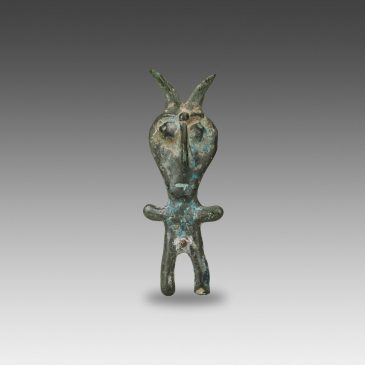
First excavated in the site of Piravand statuettes of this type, sometimes referred to as “idols”, are bronze cast and always virtually flat.
1st millenium B.C.
H : 5.8 cm
Out of stock
Product Description
First excavated in the site of Piravand (in a northern marginal region of modern-day Luristan, in Iran), statuettes of this type, sometimes referred to as “idols”, are bronze cast and always virtually flat. They represent human figures standing upright in various postures and/or with various attributes.
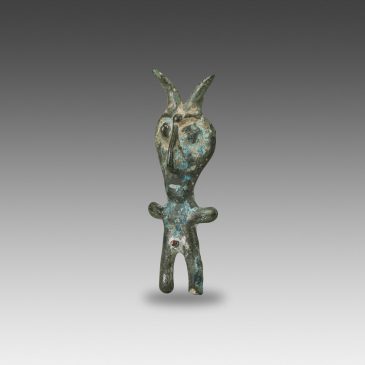
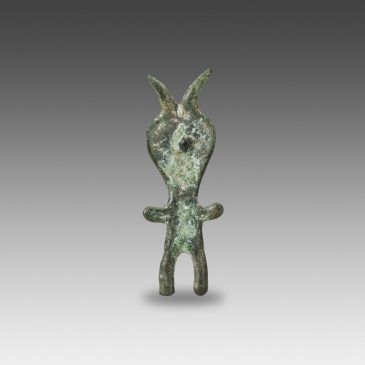
This example, smaller than the average size and which does not stand by its own, is concave in the head. The shapes are naive and disproportionate, and the outlines are highly stylized, despite the presence of many anatomical details.
It represents an entirely nude male figure, who spreads his small arms horizontally and rests on two thin legs/rods; neither the hands nor the feet are indicated. The slightly curved head, much too large compared to the rest of the body, is the only part displaying sharp anatomical details: the man looks at the viewer with his two large, bulbous eyes surmounted by arched brows. The long, triangular and very prominent nose hides a small, barely marked mouth. Two small caprine horns adorn the upper forehead.
Although different from the contemporary works produced in Luristan, such figurines can be related to them by the quality of the bronze (very rich in tin) and by a stylistic connection. The figures represented can be female, male or androgynous; they are usually naked, sometimes armed with a dagger suspended from a belt, while others hold a cup in the hand.
Most attributes and attitudes (weapons, horns, headgear, arm position, etc.) remain enigmatic to us, but probably characterized heroic or mythological figures seen as geniuses or gods, who would have been easily identified by their contemporaries.


