
Terracotta Canaanite lamp

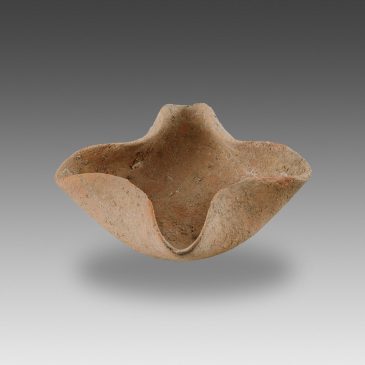
Terracotta Canaanite lamp
Terracotta Canaanite lamp
The lamp was shaped simply by folding up the rim of a circular plate – which had previously been turned on a potter’s wheel (the traces of the turning are clearly visible, especially on the rim) – at four evenly spaced points: viewed from above, the lamp thus displays an attractive design reminiscent of a four-petalled flower. The wide, round base provides the lamp with optimum stability, meaning it is unlikely to be knocked over.
2nd millenium B.C.
D : 15.4 cm
In stock
Product Description
This Canaanite lamp was shaped simply by folding up the rim of a circular plate – which had previously been turned on a potter’s wheel (the traces of the turning are clearly visible, especially on the rim) – at four evenly spaced points: viewed from above, the lamp thus displays an attractive design reminiscent of a four-petalled flower. The wide, round base provides the lamp with optimum stability, meaning it is unlikely to be knocked over.
The absence of burn marks suggests that it was never used.
This is a very simple yet attractive lamp form, originally widespread in the eastern Mediterranean, particularly in the Levant (Israel, Palestine): it first appeared towards the end of the third millennium and persisted throughout the following millennium without significant variation. It is noticeable, however, that the shape shows a clear tendency to become shorter and less bulbous and, above all, that the wick openings—here rather open and rounded—evolve into proper spouts, narrow and elongated, no doubt to hold the wick more securely and minimise risks.
From the later phases of the Bronze Age onwards, the Phoenicians exported lamps with pinched spouts (usually fitted with one or two spouts) throughout the ancient world, as far as their Iberian colonies.


