
Statue in T Symbol


Statue in T Symbol
Statue in T Symbol
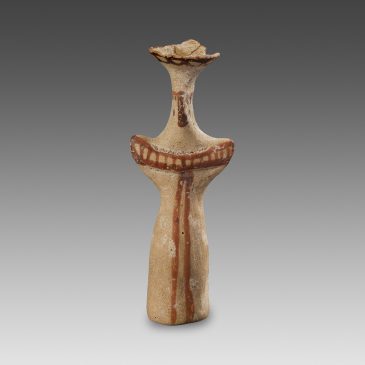
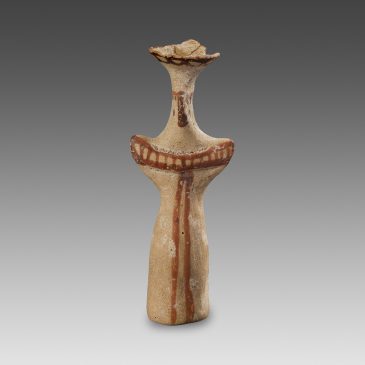
Mycenaean Terracotta Statuette in T Symbol from the 14th-13th century B.C.
This statuette, the lower part of which is hollow, was modelled by hand. It
depicts a slender, graceful woman with rather abstract features. It was from the end of the 15th century BCE that figurines of this type began to appear in Mycenaean dwellings, tombs and sanctuaries.
14th - 13th century B.C.
H : 9.2 cm
In stock
Product Description
This statuette, the lower part of which is hollow, was modelled by hand. It
depicts a slender, graceful woman with rather abstract features: her legs and
feet, entirely covered by a long cylindrical dress, are hidden from view; her arms,
spread apart and raised, form a crescent shape with her torso; the slender,
pointed shape of her face was created by pinching the clay between two fingers. On her head, she wears a triangular headdress (reminiscent of a polos despite its open shape) featuring a flexible strip that runs down her back and forms a plait.
The statuette is adorned with numerous abstract and linear elements, painted in reddish-brown, which generically denote the anatomy of the face (eyes, nose, mouth, fringe) as well as the details of the garment: a loose necklace (or the decorated top of the dress?) and the wavy edge of the polos.
It was from the end of the 15th century BCE that figurines of this type began to appear in Mycenaean dwellings, tombs and sanctuaries. They are classified
according to the shape of the Greek alphabet letter they depict: statuettes in the
Tau, such as the one under consideration (the arms form a T in relation to the torso), those in Psi, with the arms raised in a gesture of epiphany, and those in Phi (with a circular body).
The precise significance of Mycenaean figurines remains unclear and, particularly given their place of origin, several hypotheses have been put forward regarding them (they have been interpreted variously as images of a deity, as votive offerings, as companions for the deceased, or even as toys). Behind their typological uniformity, these statuettes likely conceal different uses, as best evidenced by the wide variety of sites where they have been found.


