
Hemispherical Bowl

Hemispherical Bowl
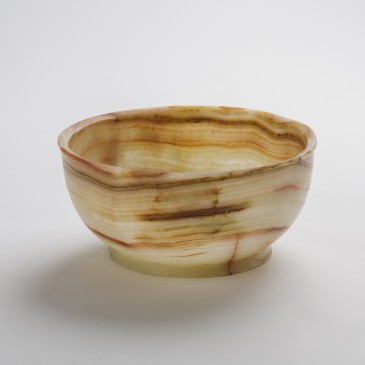
This vessel is a large hemispherical bowl without handles, provided with a flat lip and a ring base.
3rd millenium B.C.
D: 23 cm
Out of stock
Product Description
This vessel is a large hemispherical bowl without handles, provided with a flat lip and a ring base.
It is remarkable, not only for its almost perfect shape, but also for its “decoration” simply resulting from the natural polychromy of the stone: despite our current knowledge, it is difficult to imagine that stone craftsmen would have developed such skills and knowledge in the early Bronze Age already (a time when metals technology was in its initial phases). For our example, the artist selected a block of alabaster according to its shape and size, and then polished it with harder stones to achieve this outstanding, unique result.
Several millennia after it was produced, this bowl is still so close to the human sense of aesthetics that it can only be admired!
In the Neolithic period already, stone vessels had a key role in the Near Eastern economies, since they can be found almost everywhere (from Egypt to the Mesopotamian, Iranian or Bactrian worlds), in many shapes, for varied uses, in various dimensions and stones. The shape of our example is not attested in ancient Egypt and appears to be related to Near Eastern repertoires.


