
Perfume Flask in dark blue color

Perfume Flask in dark blue color
Perfume Flask in dark blue color
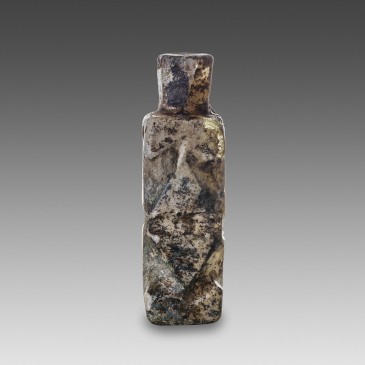
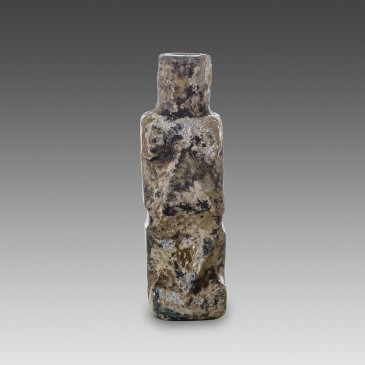
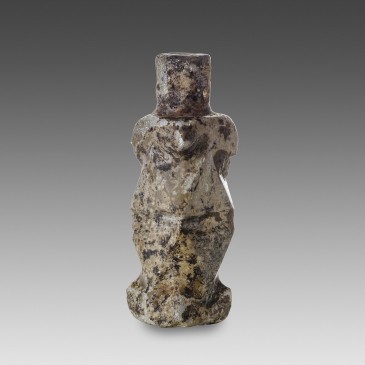
This cut-glass bottle features a three-dimensional geometric design composed of triangular facets. Its size is typical for this class of small perfume vases. The transparent glass reveals ice-colored reflections.
10th century A.D., 9th century A.D.
H: 5.6 cm
In stock
Product Description
This cut-glass bottle features a three-dimensional geometric design composed of triangular facets oriented in various directions. Its size is average for this class of small perfume vases. The transparent glass occasionally reveals golden reflections.
The lower section, shaped like a parallelepiped, rests on an apparently flat base: each face is furrowed by deep lines that form geometric patterns, notably including opposing triangles. The neck, with a smooth surface, is hexagonal.
The type of container to which it belongs is widely found throughout the contemporary Muslim world: its name (“molar flask” in English) derives from the shape of the four small, pointed feet—a feature found on many such bottles—which resembles that of a molar.
Despite their attractive and varied appearance, they served a specific commercial purpose, as they were used to transport cosmetics—presumably liquids, given their tall, narrow necks. Although often attributed to Egyptian workshops (in the city of Fustat, for example), it is more likely that the “molar flasks” were produced in several centers, as suggested by the differences in the carved motifs, shape, type of feet, and color of the glass used: in addition to Egypt, workshops located in Iran are also considered likely sources.


