
Iapygian Spherical Jug

Iapygian Spherical Jug
Iapygian Spherical Jug
The shape and style allow this vessel – a known but relatively rare type – to be dated to the early phase of Daunian pottery development, characterised by high-quality pieces and predominantly geometric decoration: the presence of sculptural elements, such as the animal head on this jug, is well documented.
6th century B.C.
D : 17.5 cm
In stock
Product Description
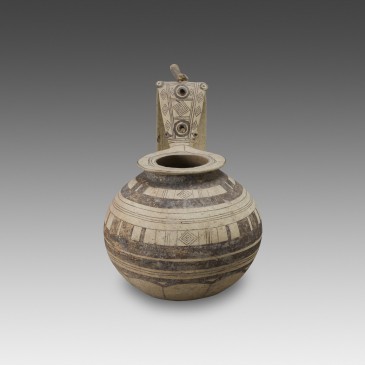
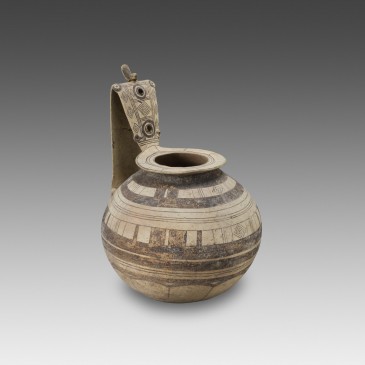
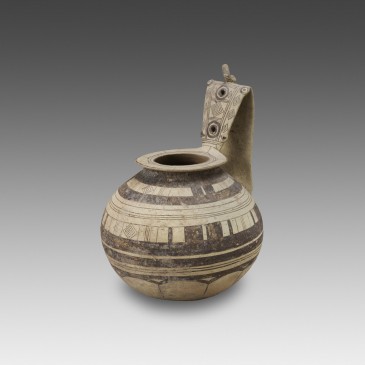
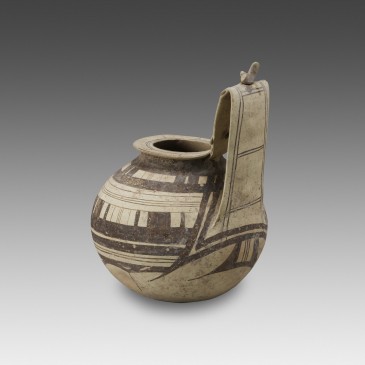
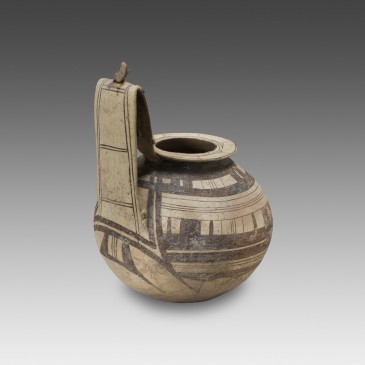
A vase with a spherical body, topped by a small neck and a flat, overhanging rim. The ribbon-shaped handle is notable for its tall, triangular shape and its decoration of circles and lozenges: at its top, it is adorned with a stylised animal’s head, with a pointed snout and large ears, which one might be tempted to identify as a fox.
The decoration, executed with great precision and skill, is arranged in a succession of thick bands and horizontal fillets, with friezes of metopes sometimes containing concentric lozenges.
The shape and style allow this vessel – a known but relatively rare type – to be dated to the early phase of Daunian pottery development, characterised by high-quality pieces and predominantly geometric decoration: the presence of sculptural elements, such as the animal head on this jug, is well documented.
The term ‘Iapyges’ refers to the various indigenous tribes that inhabited the region corresponding to present-day Puglia. These were subdivided into the Daunians, who occupied the north of the region (the Gargano promontory – the Foggia area), the Peucetians (the central part, the Bari area) and the Messapians (the southern part, present-day Salento).
Relations between the indigenous peoples (who lived inland) and the Greek colonists, who were mainly settled in the coastal towns of the Adriatic, were always fraught with conflict. Stylistically, the development of Daunian pottery followed its own distinct tradition, largely impervious to influences from the contemporary Italic style (painted using the red-figure technique), which was aimed at people of Greek origin.


