
Ancient Art and Antiquities For Sale

Cart

View Cart
  • No products in the cart.
  • My Account
    • Edit address
    • Change password
    • View order
  • English
  • Login / Register
  • HOME
  • SHOP
  • ABOUT US
  • BLOG
  • CONTACT
  • BILIANAK.
  • PHOENIX ANCIENT ART
Back to top

Amulet representing Isis Lactans

Home  / Amulets / Amulet representing Isis Lactans
View cart “Egyptian faience ushabti of Queen Henuttawy” has been added to your cart.
  • Amulet representing Isis Lactans-70
  • Amulet representing Isis Lactans-70
  • Amulet representing Isis Lactans-70
  • Amulet representing Isis Lactans-70

Amulet representing Isis Lactans
Amulet representing Isis Lactans
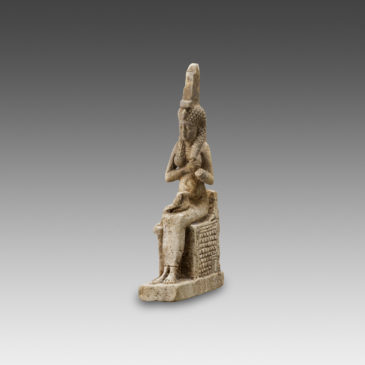
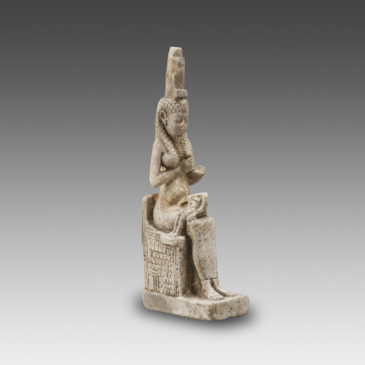
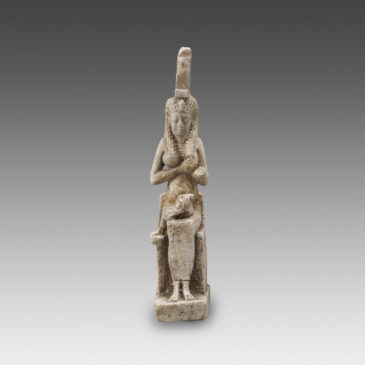
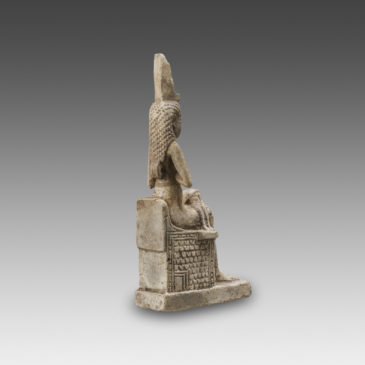
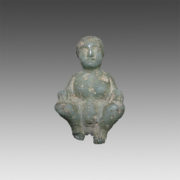
Egyptian faience Amulet representing Isis Lactans from the 7th-1st century B.C. Isis is seated on a low-backed, richly ornamented throne. The goddess holds little Horus on her knees, whom she is breastfeeding. She wears a finely braided wig surmounted by a small throne, Isis’s primary attribute. Complete and in good condition even if Horus’ head and the left hand of the goddess are lost.

Egyptian
1st century B.C., 7th century B.C.
H : 9.9 cm

Price:CHF 12'000

Category: Amulets. Tags: Amulet, Amulet representing Isis Lactans, Egypt, egyptian, Faience, Horus, Isis.

Love it, share it!

  • Description
  • Additional information
  • Product Inquiry

Product Description

Egyptian faience Amulet representing Isis Lactans from the 7th-1st century B.C.

According to Egyptian mythology, with her magical powers, Isis conceived a posthumous son from her husband, Osiris, who was killed by Seth; she gave birth to the child Horus and raised him in the marshes of the delta, hidden by the high papyrus.

Isis is seated on a low-backed, richly ornamented throne. The goddess holds little Horus on her knees, whom she is breastfeeding. She wears a finely braided wig surmounted by a small throne, Isis’s primary attribute. She brings her right hand to her breast, clearly indicating her role as a feeder. The child, partially preserved, is chubby and nude, with his feet placed on the edge of the chair. A ring in the lower part of the woman’s hair allowed suspension of the figurine around the neck with a cord: this piece would therefore be used as an amulet-pendant.

The exact meaning of these statuettes, which have many equivalents in bronze, is unclear: were they ex-votos protecting the health of children, figurines related to fertility cults, funerary statuettes celebrating rebirth, etc.?

Complete and in good condition even if Horus’ head and the left hand of the goddess are lost.

Additional information

Culture

Egyptian

Datation

1st century B.C., 7th century B.C.

Dimensions

H : 9.9 cm

Type

Amulet

Material

Faience

Colors

Blue, White

Condition

Complete and in good condition even if Horus' head and the left hand of the goddess are lost.
Serial Number

700

Other Products

  • Statuette of a crouching woman - 12880
    Details Add to cart
    ADDED

    Statuette of a crouching woman

    Statuette of a crouching woman

    Greco-Roman molded glass statuette / amulet of a crouching woman from the 3rd century B.C. – 2nd century A.D. Complete and in good condition despite few chips and cracks.

    It depicts a completely nude female figure, seen from the front and portrayed in a very distinctive pose: she is crouching, but only her feet, resting flat on the ground, touch the floor.

    CHF 2'800 Read More
  • Details Add to cart
    ADDED

    Pendant / Amulet with the Head of Bes

    The Pendant / Amulet with the Head of Bes

    It is in the shape of a small flat bust, with a slightly rounded bottom. At the level of the crown, it is pierced horizontally for a suspension string, which would have allowed the amulet to be worn as a necklace, for example.

    CHF 3'800 Read More
  • White-glazed Egyptian Faience Ushabti (Dynasty 21-22)
    Details Add to cart
    ADDED

    White-glazed Egyptian Faience Ushabti (Dynasty 21-22)

    White-glazed Egyptian Faience Ushabti (Dynasty 21-22)

    This ushabti represents a male figure with a short false beard and a rounded wig, only painted on the front part of the statuette. From the late New Kingdom on, the iconography and the purpose of the ushabtis were standardized: from substitutes for the deceased, these figurines became slaves and served their masters in the chores of daily life.

    CHF 4'600 Read More

Blog

Antique Idols

As soon as humans were able to think, they consistently […]

Antiquity’s Colors

English Translation Soon Les œuvres qui nous sont parvenues de […]

Glassware production

Glass, a luxury and exquisite material, whose technical virtuosity reached […]

Categories

  • Artifacts
  • Events & exhibitions
  • Facts & Figures
  • The gallery
  • FAQs
  • Terms of Use
  • Terms of Sale
  • Contact us

©Designed by Webgenève - Création de site internet


Rue Etienne Dumont, 9 1204 Geneva
Tel. +4122 301 9378
Email: contact@young-collectors.com

This website uses cookies. If you continue browsing this website, your action is considered to be a cookie policy acceptance.
