
Female Figure with Clasped Hands

Female Figure with Clasped Hands
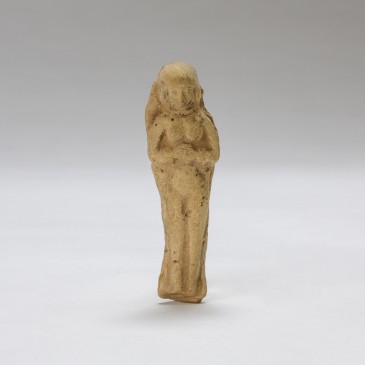
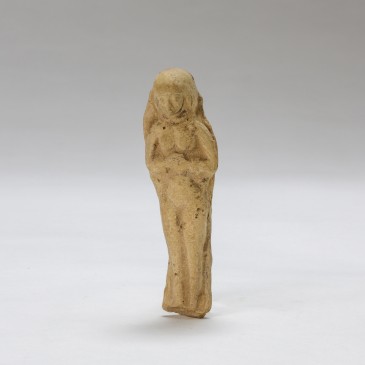
This terracotta image in relief represents a standing, richly adorned nude woman: large necklace and bracelets on the wrists.
19th century B.C., 2nd millenium B.C.
H: 9.4 cm
Out of stock
Product Description
This terracotta image in relief represents a standing, richly adorned nude woman: large necklace and bracelets on the wrists.
Less accentuated than on other Near Eastern terracotta examples, the sexual connotation is nevertheless still present, as attested by the nudity of the woman, by her abundant, rounded breast and by her clearly indicated pubic triangle. Her forearms are clasped on her belly, and her hands with incised details are simply crossed. This gesture is a distinctive feature of a minor, although well-known deity of the Mesopotamian pantheon, the goddess known as Lama: this figure played an important protective role (a sort of guardian angel) and was an intermediary between the devotee (the owner of the image that she protected) and a higher divinity before whom her intercession or reconciliation was requested.
This popular art form (these terracotta plaques were mass-produced and made of stamped clay, the posterior part was flat and undecorated) appeared in the Near East around the late 3rd millennium B.C. and reached its peak during the following centuries. These small reliefs feature a large range of subjects, including religious and official scenes, secular scenes that were related to the everyday lives of the believers (professional, erotic, musical scenes, etc.). The molds circulated from city to city and served several times, which might explain their uneven quality, even when the subject is similar. They were used as ex-votos for offerings and are therefore a valuable evidence of the popular religious devotion.


