
Greek terracotta figure showing the myth of Europe

Greek terracotta figure showing the myth of Europe
Greek terracotta figure showing the myth of Europe
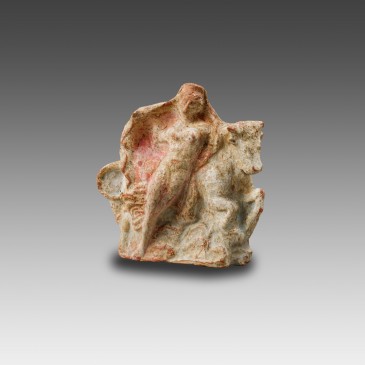
The group comprises two figures: with natural grace, a young woman rides astride a bull that is galloping rapidly towards the viewer’s right. Indeed, the young woman is Europa (the mythological figure after whom our continent is named), who was one of the three daughters of the King of Tyre (a major Phoenician coastal city). She was abducted by Zeus on the beach where she was playing with her sisters: the god appeared to her in the form of a magnificent white bull and carried her, riding the waves of the sea, all the way to Crete.
2nd century B.C., 3rd century B.C.
ca. 14 x 14 cm
In stock
Product Description
The group comprises two figures: with natural grace, a young woman rides astride a bull that is galloping rapidly towards the viewer’s right.
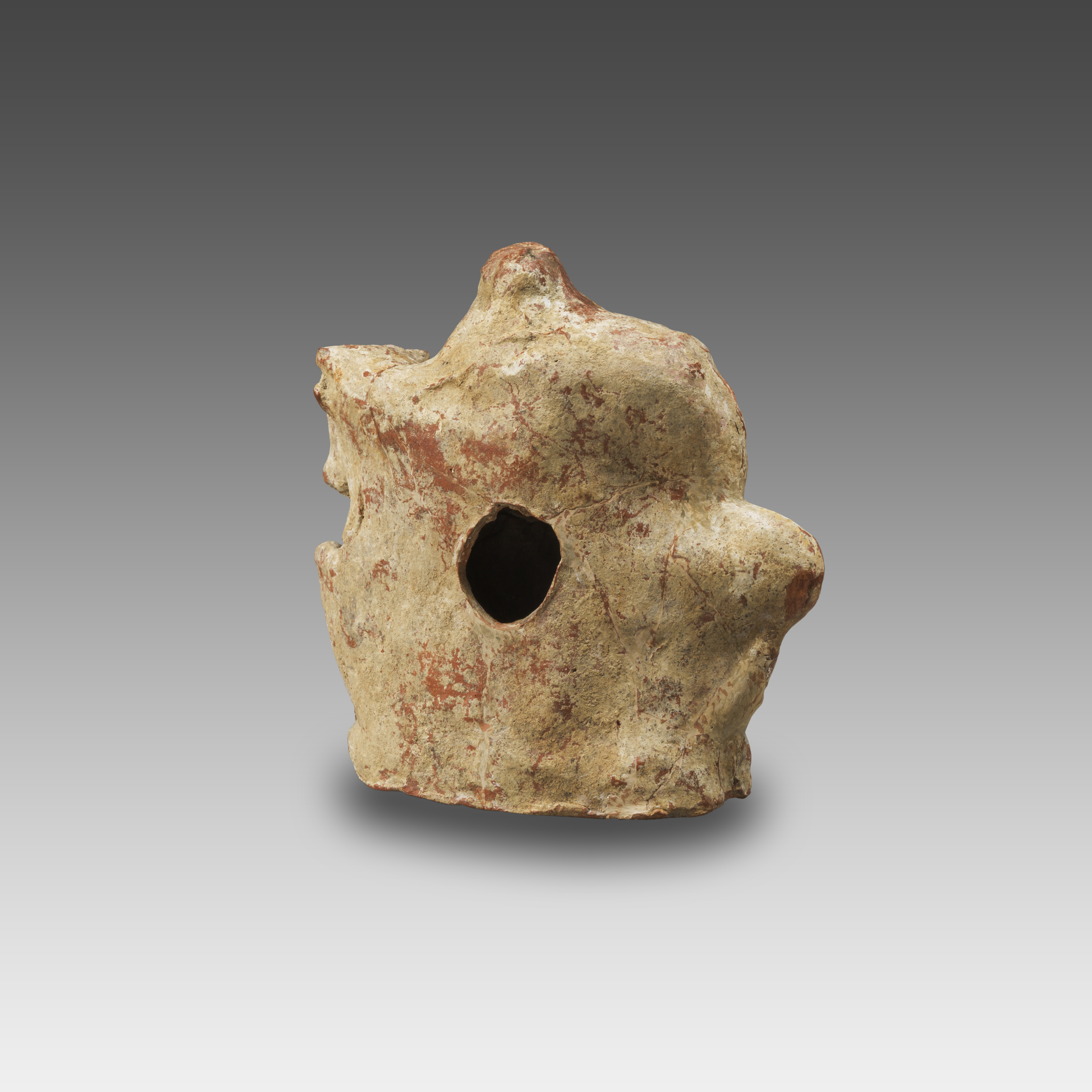
The piece is entirely hollow and was made using what was probably a bivalve mould; it is well detailed on the obverse but roughly modelled on the reverse; the vent hole is small and circular.
This image depicts a legend which, given the current political situation, takes on a very significant symbolic meaning. Indeed, the young woman is Europa (the mythological figure after whom our continent is named), who was one of the three daughters of the King of Tyre (a major Phoenician coastal city). She was abducted by Zeus on the beach where she was playing with her sisters: the god appeared to her in the form of a magnificent white bull and carried her, riding the waves of the sea, all the way to Crete. On this terracotta piece, the waves are clearly depicted in light blue beneath the animal’s hooves. Europe is depicted naked, but she is holding a flowing red cloak in her hands, which flutters in the wind behind her back, thus conveying the sense of the two figures’ rapid movement.
Although attested in several depictions (terracotta pieces, vase paintings, mosaics), this subject is not very common in Greco-Roman art. Already known from 5th-century BC Boeotian terracottas, the motif reproduced in this example subsequently appeared in the Italian colonial world, where Europa became the symbol of the soul carried away to the blissful shores of the afterlife.


