
Byzantine Terracotta Oil lamp

Byzantine Terracotta Oil lamp
Byzantine Terracotta Oil lamp
The shape, style and decoration of this example are typical of lamps produced during the final centuries of the Empire and the early Byzantine period: the most active workshops were located in North African cities, but their
products were often imitated elsewhere, notably in Italy and Gaul.
Half of the 5th - begining of the 7th century A.C.
L : 12.8 cm
In stock
Product Description
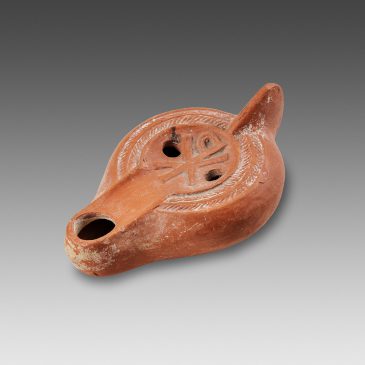
The lamp was moulded from a fine, brick-coloured clay and covered with a bright orange slip. The circular body is extended by a long, rounded channel, featuring a hole for the wick to emerge. A small, sturdy, hand-made handle is attached to the back. The base consists of a flat ring with a cord running up to the handle. The medallion features two parallel filling holes.
The decoration is confined to the medallion: a band adorned with a long fishbone surrounds one of the most widespread Christian iconographic motifs, the Constantinian chi-rho (here with the rho facing left). This symbol, composed of the first two letters of Christ’s name written in Greek (Χ, chi, and Ρ, rho), is most often associated with the first emperor to proclaim himself a Christian, Constantine the Great (emperor from 306 to 337 AD).
The shape, style and decoration of this example are typical of lamps produced during the final centuries of the Empire and the early Byzantine period: the most active workshops were located in North African cities, but their
products were often imitated elsewhere, notably in Italy and Gaul. Their remarkable success was undoubtedly due to their rich iconography, generally linked to Christian beliefs (scenes from the Old Testament, symbols such as the lamb, the dove, the fish, the palm tree or the chi-rho).


