
Iapygian Thymiaterion

Iapygian Thymiaterion
Iapygian Thymiaterion
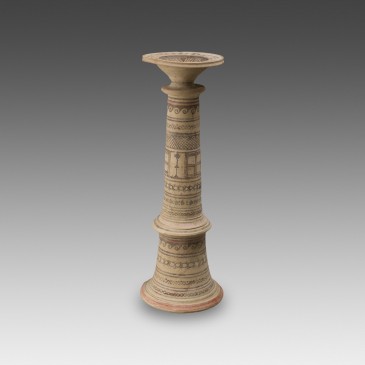
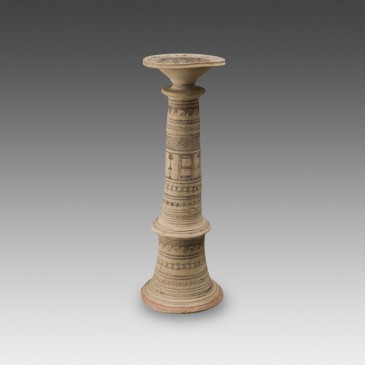
The thymiaterion was a funeral vessel, very rare in the repertoire of Daunian pottery, which was generally used to make offerings and to burn scented substances.
3rd century B.C., 4th century B.C.
H : 44 cm
In stock
Product Description
The thymiaterion was a funeral vessel, very rare in the repertoire of Daunian pottery, which was generally used to make offerings and to burn scented substances.
The elongated, elegant stem supports a shallow cup, painted with a pattern of stylized leaves, in which were placed the cult substances : the perfectly preserved paint and the absence of burning traces indicate that this thymiaterion was probably intended to be deposited in a tomb.
The hollow stem, punctuated by geometric and polychromatic motifs, has a central frieze with painted doors that can probably be related to funerary beliefs (passage to the afterlife?). The doors are flanked by stems that recall the incense burners of the same type.
The word “Iapygian” refers to the indigenous tribes who inhabited modern-day Apulia in classical antiquity. They included the Daunians, who occupied the northern part of the area (Gargano promontory – Foggia region), the Peucetians (central Apulia, Bari region) and the Messapians (southern Apulia, modern-day Salento).
The relationships between the natives (who lived inland) and the Greek settlers, established mainly in the coastal cities of the Adriatic, were conflicting. Stylistically, the development of Daunian pottery follows a specific tradition that was not influenced by the contemporary Italiote style (red-figure technique) favored by the people of Greek origin.


