
Amulet of a standing Bes

Amulet of a standing Bes
Amulet of a standing Bes
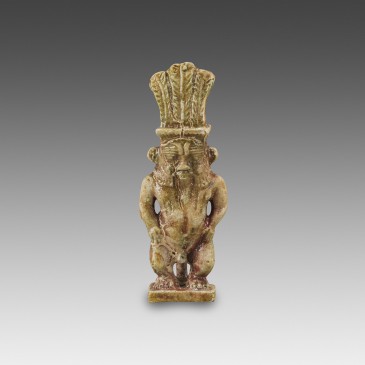
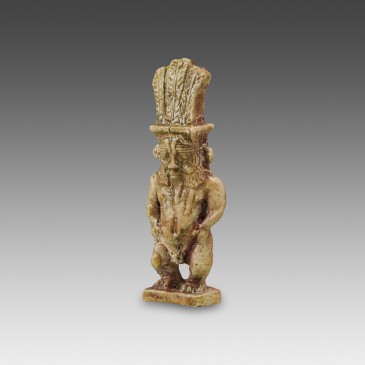
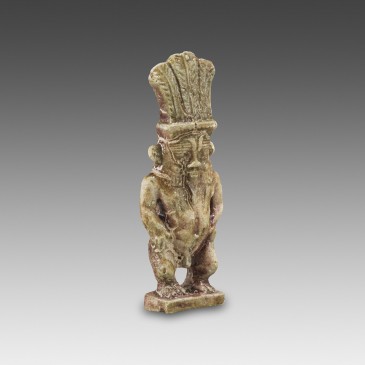
As usual, Bes sports a grimacing, grotesque expression, which makes him appear almost hilariously amused and thus portrays him as a positive and benevolent figure: his face is flattened and viewed from the front, with a wrinkled forehead crossed by thick eyebrows, wide-open eyes, a broad, flattened nose, ears reminiscent of a feline’s, and a beard ending in large, spiraling curls.
1st century B.C., 7th century B.C.
H: 8 cm
In stock
Product Description
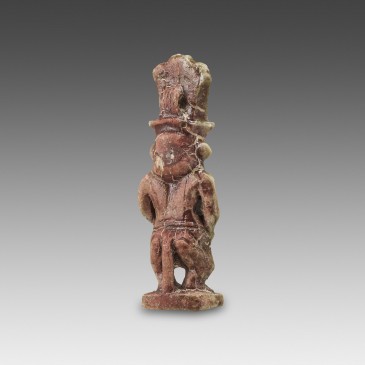
The amulet statuette was made of beige-gray earthenware. Standing firmly on his short, muscular dwarf-like legs, Bes is clad in a feline pelt draped over his shoulders (the head, center of the chest, paws, and tail are visible). On his head, he wears one of his most recognizable attributes: a feathered crown supported by a rectangular capital.
As usual, Bes sports a grimacing, grotesque expression, which makes him appear almost hilariously amused and thus portrays him as a positive and benevolent figure: his face is flattened and viewed from the front, with a wrinkled forehead crossed by thick eyebrows, wide-open eyes, a broad, flattened nose, ears reminiscent of a feline’s, and a beard ending in large, spiraling curls.
This deity, already known during the Old Kingdom, became one of the most popular figures in the Egyptian pantheon beginning in the Third Intermediate Period and continuing throughout the first millennium B.C. He was particularly benevolent toward women and children: thanks to his ugliness and fearsome appearance, he warded off misfortune and disease from them, and served as the guardian of the expectant mother’s health and the fragile fate of the newborn. Bes was also the protector of female musicians and dancers.
As prime examples of popular piety, figurines and images of this god were widespread throughout the Egyptian world: used as talismans, they could be worn as pendants, hung on a door or in a room, strung on a stick or pole and placed at the corners of a bed, or even used as rattles or toys.


