
Ancient Art and Antiquities For Sale

Cart

View Cart
  • No products in the cart.
  • My Account
    • Edit address
    • Change password
    • View order
  • English
  • Login / Register
  • HOME
  • SHOP
  • ABOUT US
  • BLOG
  • CONTACT
  • BILIANAK.
  • PHOENIX ANCIENT ART
Back to top

Statuette of an Elephant

Home  / Animals / Statuette of an Elephant
View cart “Miniature Feminine Statuette” has been added to your cart.
  • Statuette of an Elephant
  • Statuette of an Elephant
  • Statuette of an Elephant

Statuette of an Elephant

Statuette of an Elephant

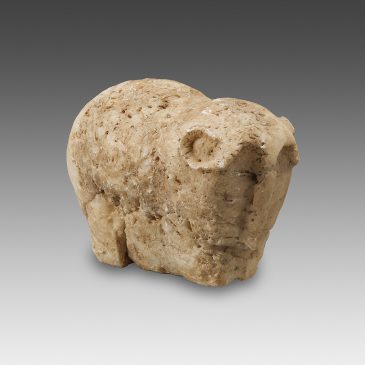
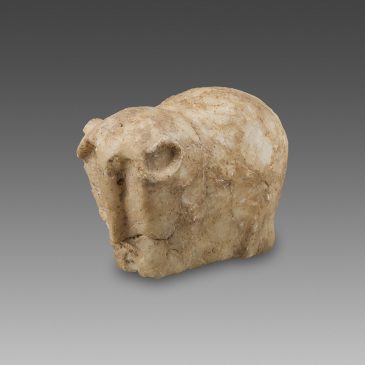
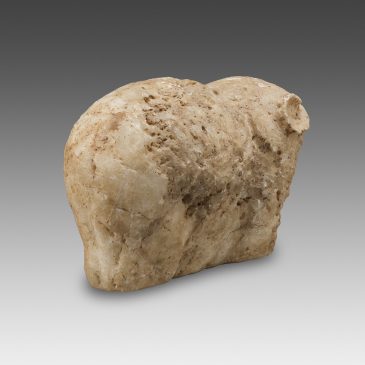
Carved from a small limestone monolith, this statuette is certainly one of the first three-dimensional images of elephant in Near Eastern art; moreover, these large mammals were rarely represented in the rich animal iconography of this prominent culture.

Near Eastern
4th millenium B.C.
H: 7.4 cm

In stock

In stock

Price:CHF 7'800

Categories: Animals, Sculpture. Tags: 4th millenium BC, Animal, Elephant, Limestone, Near Eastern, Statuette, Statuette of an Elephant.

Love it, share it!

  • Description
  • Additional information
  • Product Inquiry

Product Description

Carved from a small limestone monolith, this statuette is certainly one of the first three-dimensional images of elephant in Near Eastern art; moreover, these large mammals were rarely represented in the rich animal iconography of this prominent culture.

While modeled in a simple and somewhat naive way, the body of the animal still attracts the eye of the modern viewer. It was shaped as a cube and not hollowed between the legs, but the well-rounded posterior part clearly depicts the buttocks of an elephant. The opposite end shows more details, which enables us to confidently identify the animal represented here: the eyes (completely pierced), the trunk, the ears and the tusks of the pachyderm are accurately rendered, though in a slightly unrealistic manner.

Elephants are known to have existed in Asia and Africa, but elephant bones were also excavated in Near Eastern sites (from the Levant to modern-day Iran): according to some scholars, the existence of a local species would even be possible.

Other stone statuettes, especially a very similar figurine housed in the N. Asfar collection, confirm the hypothesis that elephants were present in Mesopotamia during the Neolithic and the Bronze Age (perhaps did they simply arouse curiosity). Furthermore, the Sumerian language included a specific word to define this animal: making a reference to its trunk and to its ability to drag heavy loads, the elephant was referred to as the “ox with hand”.
Additional information

Culture

Near Eastern

Datation

4th millenium B.C.

Dimensions

H: 7.4 cm

Type

Animal, Sculpture

Material

Limestone

Colors

White

Condition

Complete and in good condition, but partially reglued. Minor cracks and gap-fills, superficial wear on the surface.

Serial Number

2062

Other Products

  • Stela representing a Woman
    Details Add to cart
    ADDED

    Stela representing a Woman

    Stela representing a Woman

    The stele is like a large, almost rectangular slab. It depicts the bust of a woman with a somewhat stiff and impersonal expression, carved in very high relief. The base, the back and the sides are flat and roughly hewn: it is possible that it served as a funerary stele.

    CHF 14'000 Read More
  • Details Add to cart
    ADDED

    Statuette of a Human-Headed Bull

    Statuette of a Human-Headed Bull

    This Statuette of a Human-Headed Bull represents a very popular mythological hybrid figure that was largely widespread in Near Eastern iconography (especially in glyptics) from the Sumerian period, that is the bull with a bearded human head, wearing a headgear (tiara) adorned with a single pair of horns.

    CHF 9'200 Read More
  • Seal in the Shape of a Lion's Head
    Details Add to cart
    ADDED

    Seal in the Shape of a Lion’s Head

    Seal in the Shape of a Lion’s Head

    Modeled in the shape of a stylized leonine protome (the head is complete, but the body is a simple half-circle representing the mane of the animal), it was carved from a cream-colored limestone veined with red; it is pierced vertically by a hole and was therefore intended to be worn as a pendant (necklace or bracelet).

    The flat lower part of the object actually bears the seal of the owner and of his goods: it is adorned with drawings made with a bouterolle (a sort of drill).

    CHF 5'900 Read More

Blog

Antique Idols

As soon as humans were able to think, they consistently […]

Antiquity’s Colors

English Translation Soon Les œuvres qui nous sont parvenues de […]

Glassware production

Glass, a luxury and exquisite material, whose technical virtuosity reached […]

Categories

  • Artifacts
  • Events & exhibitions
  • Facts & Figures
  • The gallery
  • FAQs
  • Terms of Use
  • Terms of Sale
  • Contact us

©Designed by Webgenève - Création de site internet


Rue Etienne Dumont, 9 1204 Geneva
Tel. +4122 301 9378
Email: contact@young-collectors.com

This website uses cookies. If you continue browsing this website, your action is considered to be a cookie policy acceptance.
