
Black-Figure Lekythos

Black-Figure Lekythos
Black-Figure Lekythos
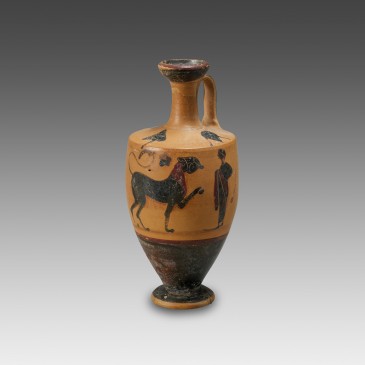
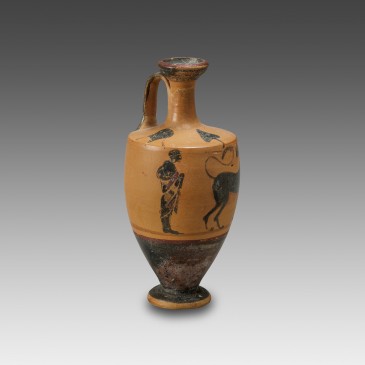
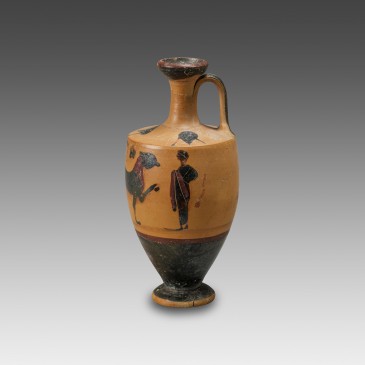
This lekythos has a rather stocky, rounded shape. It has a handle that forms a loop above the shoulder. The rim is flared and the neck is cylindrical and elongated. The base is circular and hollow.
6th century B.C.
H: 13.8 cm
In stock
Product Description
This lekythos has a rather stocky, rounded shape. It has a handle that forms a loop above the shoulder. The rim is flared and the neck is cylindrical and elongated. The base is circular and hollow.
The lekythos is the quintessential funerary oil vessel of Attic pottery: it was intended to hold the perfumed oils offered to the deceased and used during burial rites. The rarer variant, with a rather rounded profile, is still similar to the traditional examples of previous decades and would soon fall out of use in the 5th century.
Technically, this vessel is of very high quality, but its drawn lines already reveal a certain stylisation in production: indeed, particularly from the 5th century onwards, the popularity of this form was such that potters and painters had no choice but to resort to extensive standardisation and a decline in the quality of workmanship in order to keep pace with growing demand. This example is decorated using the so-called black-figure technique, which was widely employed by painters throughout the 6th century BC. Red highlights emphasise certain details.
The main scene, which occupies the central part of the body, features three figures: two men standing in profile, draped in long cloaks, flanking a panther. The beast, disproportionately large compared to the men, is walking towards the right of the image whilst raising one of its front paws; it turns its head and looks directly at the viewers. On its shoulder are a stylised ivy leaf and two lotus buds.


